+91 7909 164 164
  life@seasontwo.com

Designing Dreams: Geku George’s Architectural Journey From Kerala to the World

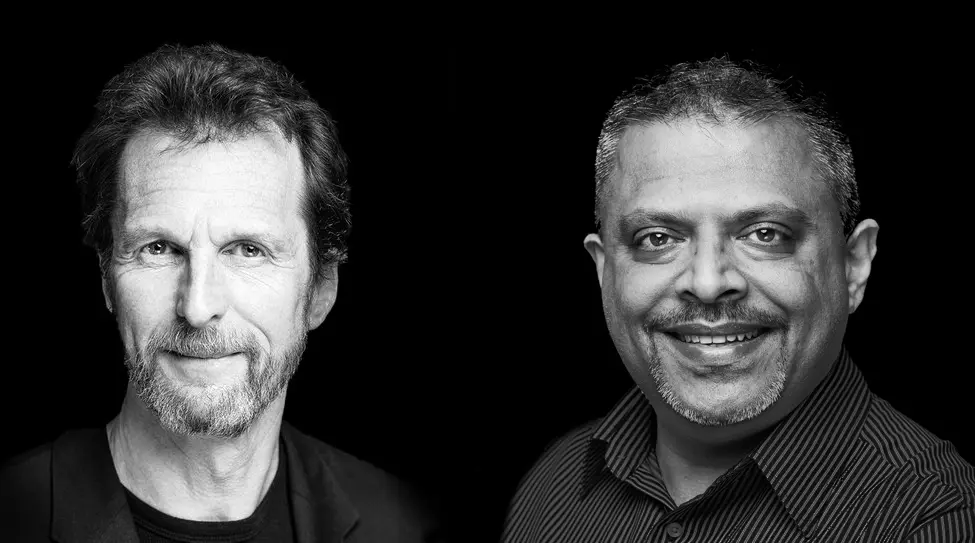
What if a childhood dream of wielding a chef’s knife quietly gave way to a destiny shaped by a drafting pencil? For Geku George, this transformation marked the beginning of a remarkable architectural journey, one that started in Kerala and has since spanned continents.
It all began during his pre-university years, when the construction of his family home sparked an unexpected fascination with architecture. That initial spark would grow into a passion strong enough to carry him far beyond India’s borders, eventually leading him to co-found a prominent architectural firm in the United Kingdom and contribute to iconic projects across the globe.
Geku Kuruvilla George launched his international career as a Senior Architect on the Burj Al Arab – Dubai’s sail-shaped marvel and one of the world’s tallest and most luxurious hotels. While the project, designed by Tom Wright, has become a glittering symbol of contemporary architecture, for Geku, it was a pivotal moment, an opportunity to showcase his skill on the world stage and lay the foundation for a career defined by design excellence.
His formal training began at the Manipal Institute of Technology in Karnataka, India, where he developed a grounding in architectural theory and design. But it was during his time at Iyer & Mahesh Architects in Trivandrum, under the mentorship of N. Mahesh, that his architectural sensibilities truly began to take shape.
In 1996, Geku joined Atkins in Dubai, one of Europe’s leading multi-disciplinary design and engineering consultancies. There, his vision and leadership quickly propelled him through the ranks and by 2007, he had been appointed Director at Atkins headquarters in England, overseeing landmark architectural developments across continents.
Driven by a passion for distinctive designs that make a difference, he later co-founded Wright Kuruvilla Architects Ltd (WKA) in the UK alongside celebrated British architect Tom Wright. The firm is a testament to their shared commitment to creating bold, sustainable and elegant architectural designs that are not just visually striking but deeply rooted in context and purpose.
From the quiet lanes of Kerala to the skylines of global cities, Geku George’s journey is a testament to the power of following one’s evolving dreams and having the courage to draw new ones along the way.
- Tryst With Destiny
- Designing Landmarks Across Continents
- His Design Recipe
- Mentored By Masters
- The Pillars Of His Success
- Reflections On India’s Built Beauty
- Blueprints For His Homeland
- Onam: A Celebration Without Borders
- Senior Living Community for Graceful Ageing
- A Taste That Never Fades
- Above All Heights: A Son at Heart
Tryst With Destiny
“Luck played a role; I happened to be in the right place at the right time.”
It was during a vacation in 1996 in Dubai that Geku George first caught wind of a major architectural venture underway in the city, an ambitious project led by none other than Atkins. Encouraged by friends, he decided to make a call to their Dubai office, expecting little to come of it. But fate, it seemed, had other plans.
The call didn’t get caught in layers of reception or bureaucracy; it went directly to Tom Wright, the visionary architect behind the Burj Al Arab and the Design Director for the project. What began as a casual inquiry quickly turned into an impromptu interview, and before long, an offer. That moment marked his first international break, a pivotal chapter in his professional journey.
Looking back, Geku doesn’t attribute the experience entirely to chance. Instead, he reflects with thoughtful clarity:
“While certain things in life may feel serendipitous or destined, we have a significant amount of control over how we shape our own paths.”
Designing Landmarks Across Continents
Geku George’s architectural legacy spans continents, with each project offering a unique synthesis of place, purpose, and elegance. His work with WKA Ltd includes some of the world’s most iconic developments, each one a testament to innovation and design excellence.
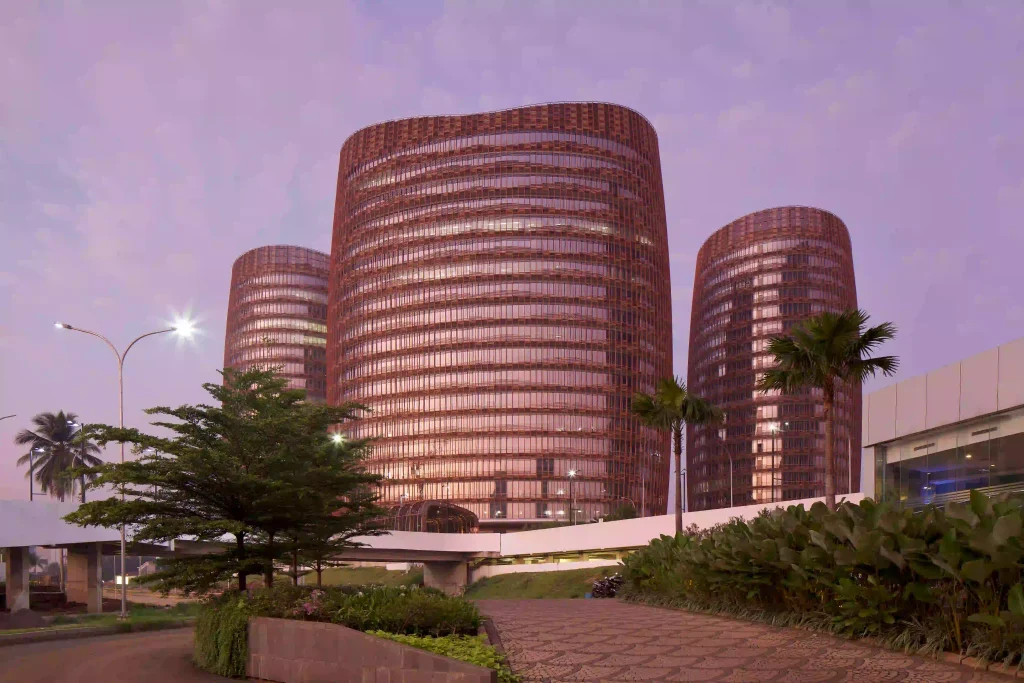
In Jakarta, Indonesia, the proposed Regatta Arch Hotel rises 160 metres above the shoreline, housing 320 luxury hotel rooms in a structure that commands attention. Nearby, the completed Regatta Apartments form a striking cluster of buildings shaped like yachts sailing toward distant horizons, an architectural tribute to movement and exploration. In Bangkok, Thailand, the 53-storey, 200m high Millennium Residence redefines high-end urban living with its bold vertical presence and refined interiors.
In Sofia, Bulgaria, the Capital Fort office complex featured in Hollywood movies ‘Memory’ starring Liam Neeson & Monica Bellucci and ‘Subservience’ starring Michele Morrone & Megan Fox, seamlessly blends functionality with architectural form. While in Batumi, Georgia, the proposed Ad Astra Tower presents a vertical integration of luxury hotel, residential, and office spaces, all grounded by a dynamic retail podium. It is especially notable for transforming fiction into function. At its pinnacle, the Astra Star Heliport, a striking, kinetic structure inspired by James Bond films, opens and closes dramatically, welcoming guests who arrive by Helicopter into the exclusive Sky Champagne Lounge nestled just beneath, creating an experience of cinematic elegance and intrigue.
In Mumbai, India, the proposal for the Taj Hotels, Lands End Gold Hotel envisions a five-star sanctuary of 400 hotel rooms, an embodiment of luxury and timeless hospitality. Across the sea in Dilmunia, Bahrain, the completed Hanging Gardens development draws inspiration from traditional boat sails, expressed through graceful, double-curved towers that house apartments and luxury hotel spaces.
Among his most personally significant projects is Dubai’s iconic Burj Al Arab, a symbol of architectural daring where he could work with the project design team as a 29-year-old on site in 1996. Equally meaningful are Jakarta’s multi-award-winning South Quarter and SQ Rés, developments that seamlessly blend sustainability, technology, and natural beauty. South Quarter stands as one of Jakarta’s greenest office complexes, incorporating comprehensive energy and water conservation strategies.
Together, these landmark projects showcase not just architectural brilliance but a philosophy that transcends geography, creating meaningful, inspiring spaces wherever they rise.
“Our best project is always the next one.”
His Design Recipe
Adaptability
“To design with purpose is to respond intelligently to context, pushing creative boundaries while staying rooted in local culture, climate, and social dynamics,” says Geku George. Whether it’s adapting to the spiritual sensibilities of India, where ancient principles like Vastu Shastra often guide design, or aligning with minimalist, function and energy-driven preferences abroad, his approach is grounded in flexibility, cultural sensitivity and collaboration. For Geku, adaptability is not about compromise; it is about insight, innovation and crafting buildings that are exceptional in design while being both globally attuned and locally resonant.
User Experience
For him, architecture goes beyond form; it’s about how a space feels, how it enhances daily life, and supports the activities of those who use it. His commitment to user-friendly design was evident when he designed a special needs school in 2000 for autistic children called Freemantles in Woking, England. He spent four months deeply understanding autistic kids’ needs, travelling with them, observing their routines, and spending meaningful time with them to create a space that truly supported their way of learning and living.
Sustainability
Guided by the Brundtland Commission’s definition of sustainable development – “Development that meets the needs of the present without compromising the ability of future generations to meet their own needs”, his approach prioritises reducing environmental impact while enhancing occupant comfort and building performance. Now “Form follows Energy,” he says, reflecting a shift from traditional design philosophy of “Form follows Function,” towards a carbon-zero future. Working primarily with commercial clients, he balances environmental responsibility with economic viability, ensuring that sustainable choices also make commercial sense. In cities with strong energy regulations, his projects naturally align with market expectations, proving that thoughtful, sustainable design can also be a smart business strategy.
Mentored By Masters
He hasn’t forgotten where it all began. “My true growth as an architect started during my time with N. Mahesh at Iyer & Mahesh Architects in Trivandrum,” he reflects. “It was further shaped through my experience working with Tom Wright in Dubai and the UK.” For the past 29 years, Tom Wright has remained both a collaborator and a profound influence on his architectural style. With a smile, he adds, “Tom would probably turn red if I called him my idol, so let’s just say I’ll go with Renzo Piano instead.” It’s from Piano’s philosophy that he draws a guiding principle: that true architecture lies in creating meaningful, lasting connections between people, nature, and the future. Inspired by these mentors, he considers co-founding Wright Kuruvilla Architects Ltd (www.wka.studio) alongside Tom Wright the boldest and most defining move of his career.
The Pillars Of His Success
He credits much of his success and the appreciation he receives to the unwavering support of his family and mentors. “Behind every step I’ve taken in my career, my family’s support has been a quiet but powerful force,” he says with gratitude. Their encouragement hasn’t always been loud, but it has been constant, steady through uncertainties and celebratory in moments of triumph. “Whether it was urging me to take a leap, helping me stay grounded during setbacks, or simply reminding me of my worth when I began to doubt it, their belief in me has been everything.” For him, the greatest recognition hasn’t come from awards or public acclaim; it has come from the love, encouragement, and unwavering belief of those closest to him. “Their respect reminds me that a lasting legacy is not defined by titles or achievements, but by the lives we influence along the way.”
Reflections On India’s Built Beauty
With the extensive global exposure he has gained over the years, he holds deep admiration for India’s architectural legacy, rooted in astronomy, mythology, and harmony with nature. From the exquisitely carved temples of Tamil Nadu to the majestic forts of Rajasthan and the stepwells of Gujarat, India’s structures reflect centuries of cultural, spiritual, and engineering brilliance. Monuments like Khajuraho, Hampi, and the Taj Mahal stand as a powerful demonstration of the engineering brilliance of this heritage. Yet, he notes, modern sensibilities often overlook the profound sophistication embedded in these ancient forms. As architectural tourism is one of the vital pillars of India’s economy, he stresses the need for a balanced, sustainable approach, one that safeguards these treasures, allowing them to educate, inspire, and contribute to the economy for generations to come.
Blueprints For His Homeland
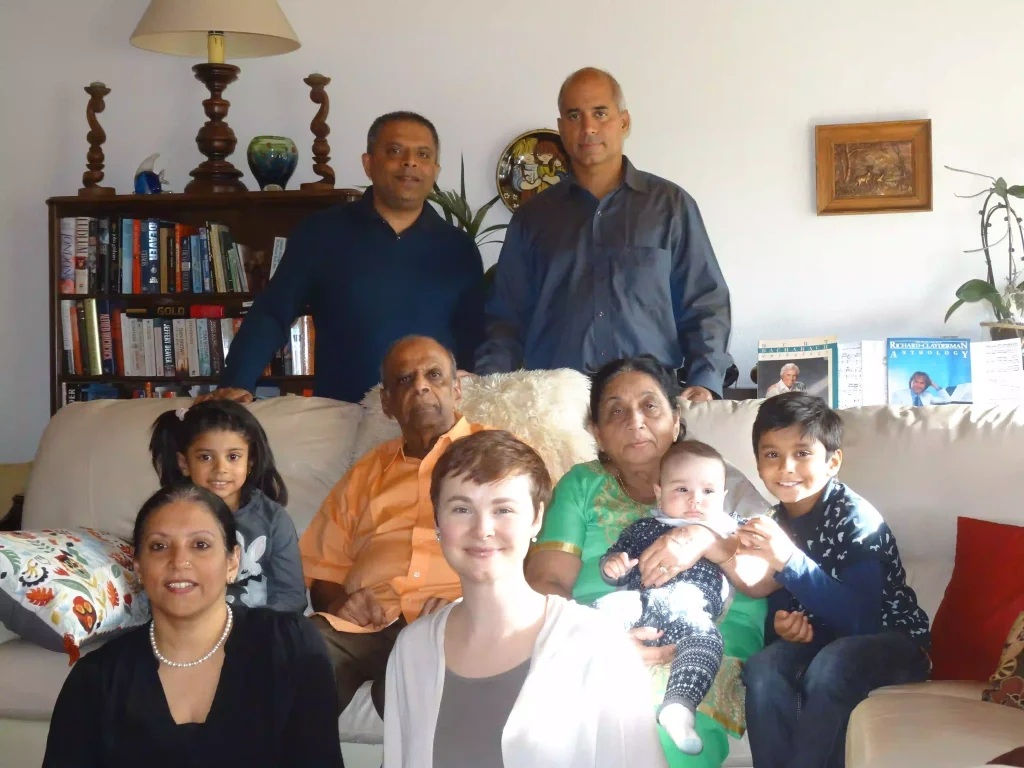
Today, as Geku builds a life in the United Kingdom with his wife and their son, his sister, Genu, nurtures her family in Switzerland, and their mother carries forward her journey with quiet strength in Trivandrum, Kerala. For him, Trivandrum is not just where he grew up, but also where his mother lives, and his love for architecture quietly took root. He sees it as a place where colonial charm, indigenous design and nature coexist beautifully.
He envisions an architectural future for his home city that carefully weaves heritage with innovation. Future designs could emphasise passive design strategies, incorporate natural ventilation, green roofs, deep shaded terraces, solar energy integration and vertical gardens that suit the region’s lush landscape. He urges city planners to create inclusive, connected spaces: integrate residential, commercial and public spaces for accessibility and liveability; prioritise pedestrians, cyclists and transit users; use low-carbon materials; retrofit existing structures; embed nature into every aspect of urban growth and protect forests, wetlands, coastlines and natural habitats. It’s a vision born from lived experience and driven by hope for the place he fondly calls home.
Onam: A Celebration Without Borders
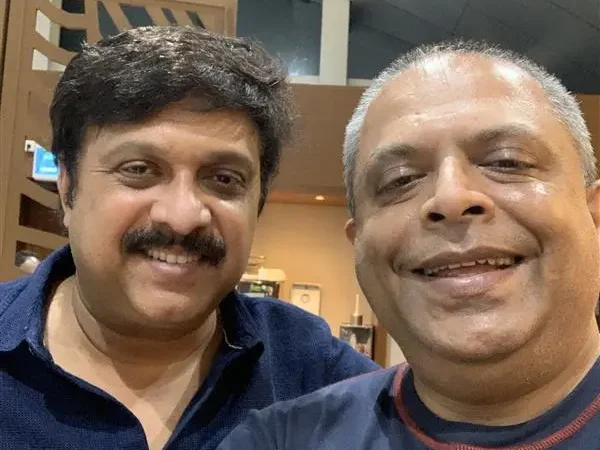
No matter how far his career has taken him, Onam remains one of Geku George’s most treasured bonds with Kerala. He fondly recalls the thrill of Pulikali dancers performing in the courtyard of his ancestral home in Pathanapuram, and the joy of shaping vibrant athapookalams with flowers freshly gathered from the garden. The festival’s highlight was always the grand Onam Sadya, often enjoyed at the home of his friend, Minister K. B. Ganesh Kumar, lovingly prepared by the late Valsala, the Minister’s mother. Today, though miles away in the UK, Onam continues to find its way into his life. Celebrations with the Malayali community and the arrival of a traditional Sadya, complete with banana leaves, recreate the spirit of home. With memories of his homeland, Geku reflects, “Onam may be a ten-day festival in Kerala, but its warmth travels with us wherever we go.”
Senior Living Community – A Haven That Supports Graceful Ageing
He believes that designing a senior living environment calls for more than just functionality; it demands a thoughtful balance of accessibility, safety, comfort, and aesthetics to truly promote independence, well-being, and a sense of home. He says, if he were to design a senior living community, he would feature wide hallways and doorways to accommodate wheelchairs, provide step-free entryways, and supportive additions like grab bars and handrails. There would be non-slip flooring, adjustable-height furniture and bright, well-placed lighting. Safety features like emergency call buttons and clear signage would help with navigation, while voice-activated controls for lights, temperature and security would make things easier to manage. To support both physical and emotional well-being, he would include a small gym or physiotherapy area, as well as quiet meditation rooms, patios and garden space to encourage outdoor time, ultimately shaping a place that feels not just liveable but lovable.
This subject resonates deeply with him, especially because his mother, Valsa George, now resides at Season Two- a supportive community she moved into after his father, George Kuruvilla, passed away in 2023.
A Taste That Never Fades
Though the years rolled on and the boy who used to say, “I’ll become a chef when I grow up,” went on to build his own empire in architecture, becoming a name of distinction in the field, he never let go of his first love: cooking “I haven’t given up on cooking. I prepare an Indian dish every weekend at home,” he reveals with quiet joy. For him, cooking is more than a hobby – it’s therapy, a calming ritual that brings balance to his otherwise busy life.
He draws a beautiful parallel between cooking and architecture, noting that both require a careful mix of skill, intuition and a surge of creative energy to bring ideas to life. “Just as cooking demands the right ingredients at the right time, good design is about blending creativity with technical precision.” He reflects that, in Malayalam, there’s a word, Kaipunyam, where Kai means ‘hands’ and Punyam means ‘virtue.’ Loosely translated, it means “gifted hands.” He believes that a touch of Kaipunyam guides not just good cooking, but great design too.
Above All Heights: A Son at Heart
Beyond the heights he has reached and the recognition he earned globally, what truly defines Geku George is the unwavering bond he shares with his family, especially with his mother. His success shines through the eyes of his cradle of comfort. She speaks of him with immense pride and warmth, her voice filled with admiration, her heart a constant source of strength and prayer. Despite the distances and demands of his profession, he remains deeply connected to his mother, grateful for the sacrifices and unconditional love that shaped his journey. It’s a quiet reminder that no matter how far we go or how high we soar, the foundation of our dreams is often built on the silent support of those who love us most.
Season Two is immensely proud to have Mr. Geku George as part of our Season Two family. We are honoured to feature a dedicated article celebrating his remarkable achievements in the second edition of our elderly-friendly magazine, Seasons: Harvest of Happiness.
Explore more inspiring stories in this edition, and subscribe to our newsletter to receive upcoming magazines directly in your inbox.
Subscribe to our magazine for free by filling out the form given below or visiting our Life at Season Two page.
Click here to fill out the form